Traditional client-server systems cost too much Tradicionālajām klienta-servera sistēmām ir pārāk lielas izmaksas
Modern organizations can no longer function without making use of electronic information. The growth of global computer networks made it possible to work with remote databases in client-server mode. By the end of the 1980s the SQL standard had won out for data exchange between the client and server computers, yet its rapid adoption did not succeed. There were several reasons for this: Šodien modernās organizācijas vairs nevar iztikt bez elektroniskās informācijas izmantošanas. Globālo datoru tīklu attīstība radīja iespēju strādāt ar attālinātām datu bāzēm klienta-servera režīmā. Datu apmaiņai starp klienta un servera datoru 80. gadu beigās bija uzvarējis SQL standarts, taču šī standarta ātra ieviešana nesekmējās. Tam bija vairāki iemesli:
- First, a single vendor's software had to be installed on users' computers, on both the client and the server side. The price of two-tier systems coupled together in this way was high. Pirmkārt, lietotāju datoros bija jāinstalē viena ražotāja programmatūra gan klienta, gan servera daļā. Šādi sasaistītu divpakāpju sistēmu cena bija augsta.
- Second, traditional two-tier client-server systems (Oracle, Informix, Ingres, etc.) demand specialized knowledge that has to be acquired over a lengthy period of staff training. Otrkārt, tradicionālās divpakāpju klienta-servera sistēmas (Oracle, Informix, Ingres u.c.) prasa specifiskas zināšanas, kas jāapgūst ilgākā personāla apmācīšanas periodā.
- Third, two-tier client-server systems had no standardized user interface — no standardized client component. A given vendor's SQL server can normally only work with its own client software. Other vendors' clients got a far smaller number of functions at best. In large organizations users frequently need data from different database platforms — Oracle, Informix and Microsoft SQL, for example. As a result, staff often had to resolve mutual configuration errors between these different pieces of software on every single user's computer. Treškārt, divpakāpju klienta-servera sistēmām nebija standartizēts lietotāja interfeiss jeb klienta daļa. Konkrēta ražotāja SQL serveris normāli spēj darboties tikai ar sava ražotāja klienta programmatūru. Citu ražotāju klientiem labākajā gadījumā bija pieejams daudz mazāks skaits funkciju. Lielās organizācijās lietotājiem bieži ir nepieciešami dati no dažādām datu bāzu platformām, piemēram, Oracle, Informix un Microsoft SQL datu bāzēm. Rezultātā personālam bieži bija jārisina šo dažādo programmatūru savstarpējās konfigurēšanas kļūdas katra lietotāja datorā.
- These limitations were reflected in the high maintenance costs of such systems. Many organizations were cautious, unwilling to tie themselves to one particular SQL server vendor's platform. It cost far too much. Minētie ierobežojumi atspoguļojās šādu sistēmu uzturēšanas augstās izmaksās. Daudzas organizācijas bija piesardzīgas, negribēdamas sevi piesaistīt konkrēta SQL servera ražotāja platformai. Tas izmaksāja pārāk dārgi.
Requirements for universal data-retrieval software Prasības universālai datu ieguves programmatūrai
At the beginning of 1995 the question of exchanging data over the global network between various Latvian state institutions and registers became pressing. At first it seemed the problem could be solved by designating a single SQL client component as the common standard for accessing databases of national importance — Microsoft ODBC or Oracle Sql*Net, for example. That decision was not adopted, however. In Latvia the majority of databases ran chiefly in FoxPro, dBase, Clipper and Access environments. Migrating these working systems to a single vendor's platform would have cost far too much. When the State Data Transmission Network project was drawn up in 1994, it included a requirement that government systems introduce universal software for retrieving data from the registers. It had to satisfy the following requirements: Latvijā 1995. gada sākumā kļuva aktuāls jautājums par datu apmaiņu globālajā tīklā starp dažādām valsts iestādēm un reģistriem. Sākumā šķita, ka problēmu var atrisināt, nosakot vienu SQL klienta daļu kā kopēju standartu piekļūšanai valsts nozīmes datu bāzu sistēmām, piemēram, Microsoft ODBC vai Oracle Sql*Net. Tāds lēmums tomēr netika pieņemts. Latvijā lielākā daļa datu bāzu darbojās galvenokārt FoxPro, Dbase, Clipper un Access vidēs. Šo strādājošo sistēmu pāreja uz viena ražotāja platformu maksātu pārāk dārgi. Izstrādājot Valsts nozīmes datu pārraides tīkla projektu 1994. gadā, tajā tika ietverta prasība valdības sistēmās ieviest universālu programmatūru datu ieguvei no reģistriem. Tai bija jāapmierina šādas prasības:
- From the user's point of view: multi-user operation, on-line access to the databases, uninterrupted 24-hour service, a convenient and simple dialogue, work with data and images simultaneously, the ability to combine data from different databases into a single reply, and access to data regardless of where the databases are located on the global network. No lietotāja viedokļa programmatūrai bija jānodrošina daudzlietotāju režīms, on-line pieeja datu bāzēm, nepārtraukta 24 stundu darbība, ērts un vienkāršs dialogs, darbs ar datiem un attēliem reizē, iespēja apvienot datus no dažādām datu bāzēm vienā atbildē, pieeja datiem neatkarīgi no datu bāzu atrašanās vietas globālajā datoru tīklā.
- From the security services' point of view: authorization of every user, automatic logging of information requests, restriction of data access according to user rights, encryption of data flows between the database and the user's computer, and the ability to restrict working hours, term of use, idle time, and computer address within the institution or on the global network. No spēka struktūru viedokļa programmatūrai tika izvirzītas drošības prasības — katra lietotāja autorizācija, izziņu pieprasījumu automātiska reģistrācija, pieejas datiem ierobežošana atkarībā no lietotāja tiesībām, datu plūsmu šifrēšana starp datu bāzi un lietotāja datoru, iespēja ierobežot lietotāja darba laiku, lietošanas termiņu, dīkstāves laiku, datora adresi iestādes ietvaros vai globālajā tīklā.
- From the data holder's point of view: centralized management of users — automated monitoring of user activity on the administrator screen, alerts about attempts to gain unauthorized access to sensitive databases over the global network. No datu turētāja viedokļa programmatūrai bija jānodrošina centralizēta lietotāju pārvaldīšana — lietotāju darbību automatizēta uzraudzība administratora ekrānā, signalizācija par mēģinājumiem nesankcionēti piekļūt sensitīvām datu bāzēm.
- From the national language point of view: re-encoding of all text from the formats stored in the data holder's databases into the Latvian character table used on the particular user's computer (DOS, LAT, BALT and RIM standards were all still in use in Latvia, and even the state standard was in fact two different code tables). No nacionālās valodas viedokļa programmatūrai bija jānodrošina visas tekstuālās informācijas pārkodēšana no datu turētāja datu bāzēs uzglabātajiem formātiem uz konkrētā lietotāja datorā lietoto latviešu burtu kodu tabulu (diemžēl Latvijā vēl joprojām tiek lietoti DOS, LAT, BALT, RIM standarti un pat valsts standarts patiesībā ir divas dažādas kodu tabulas).
- From the user training point of view: a uniform user dialogue across different information systems, and simplified training. No lietotāju apmācības viedokļa programmatūrai bija jānodrošina vienāds lietotāju dialogs ar dažādām informatīvajām sistēmām un vienkāršota apmācība.
KAKTUSS uses HTTP and HTML instead of SQL KAKTUSS SQL vietā izmanto HTTP un HTML standartus
While searching for a technical solution at the start of 1995 — just as the world's first WWW servers were appearing — the idea was born of dispensing with SQL server client components for data retrieval altogether. The authors decided to use the new HTTP protocol and the HTML information display language to create a universal data-retrieval mechanism. The system had to be built so that KAKTUSS client software could access traditional local-network databases — Clipper, FoxPro, Access — and Informix, Oracle or other SQL servers from anywhere on the global network. The new Internet information system had to use existing databases as data sources on the global networks without disrupting their day-to-day updating or correction. To reduce costs, the system had to make use of cheap personal computers, while guaranteeing a sufficiently fast response time (1–3 seconds) for hundreds of simultaneous users. Meklējot tehnisko risinājumu 1995. gada sākumā, kad pasaulē parādījās pirmie WWW serveri, dzima ideja atteikties no SQL serveru klientu daļām datu ieguvei. Idejas autori nolēma izmantot jauno HTTP protokolu un HTML informācijas attēlošanas valodu universāla datu ieguves mehānisma radīšanai. Sistēma bija jāuzbūvē tā, lai KAKTUSS klienta programmatūra no jebkuras vietas globālajā tīklā var realizēt pieeju lokālā tīkla datu bāzēm — Clipper, FoxPro, Access —, kā arī Informix, Oracle vai citu firmu SQL serveriem. Jaunajai sistēmai bija jāspēj izmantot esošās datu bāzes kā datu avotus, netraucējot to ikdienas papildināšanu. Sistēmai bija jānodrošina lēto personālo datoru jaudas izmantošana un ātrs atbildes laiks (1–3 sekundes) simtiem vienlaicīgu lietotāju.
The KAKTUSS system was created with the aim of satisfying all of the requirements listed above. The system's implementation in software was completed in August 1995. So that specific applications could be built quickly, developers only needed a command of the basics of DBF- and SQL-type database programming — knowledge provided by any Latvian technical university. Thanks to the combined use of several information technology techniques together with the new HTTP and HTML software, the result exceeded the project authors' initial hopes. Sistēma KAKTUSS tika radīta ar mērķi apmierināt visas minētās prasības. Sistēmas realizācija programmatūrā tika pabeigta 1995. gada augustā. Izstrādātājiem bija jāpārzina DBF un SQL tipa datu bāzu programmēšanas pamati — zināšanas, kuras sniedz jebkura Latvijas tehniskā augstskola. Iegūtais rezultāts pārspēja projekta autoru sākotnējās cerības.
Everything new is well-forgotten old Viss jaunais ir labi aizmirsts vecais
The KAKTUSS system is founded on the information system architecture principle used in mainframes. A professional mainframe information system has a three-tier client-server structure. At the user end sit many terminals connected to a teleprocessor. In the middle tier operate one or several transaction processors that service these terminal requests. A powerful central processor with high-capacity I/O devices operates as the final tier. Such a complex works very effectively — it is capable of serving thousands of terminals at once. This effectiveness is provided chiefly by the middle-tier software: the transaction processors. Sistēmas KAKTUSS pamatā ir informācijas sistēmu arhitektūras princips, kas tiek lietots lieldatoros (mainframe). Profesionālai lieldatoru informācijas sistēmai ir trīspakāpju klienta-servera uzbūve. Lietotāju galā atrodas daudzi termināļi, kuri pieslēgti teleprocesoram. Vidējā pakāpē darbojas transakciju procesori, kas termināļu pieprasījumus apkalpo. Jaudīgs centrālais procesors ar ietilpīgām ievadizvades ierīcēm darbojas kā pēdējā pakāpe. Tāds komplekss spēj apkalpot tūkstošiem termināļu vienlaikus.
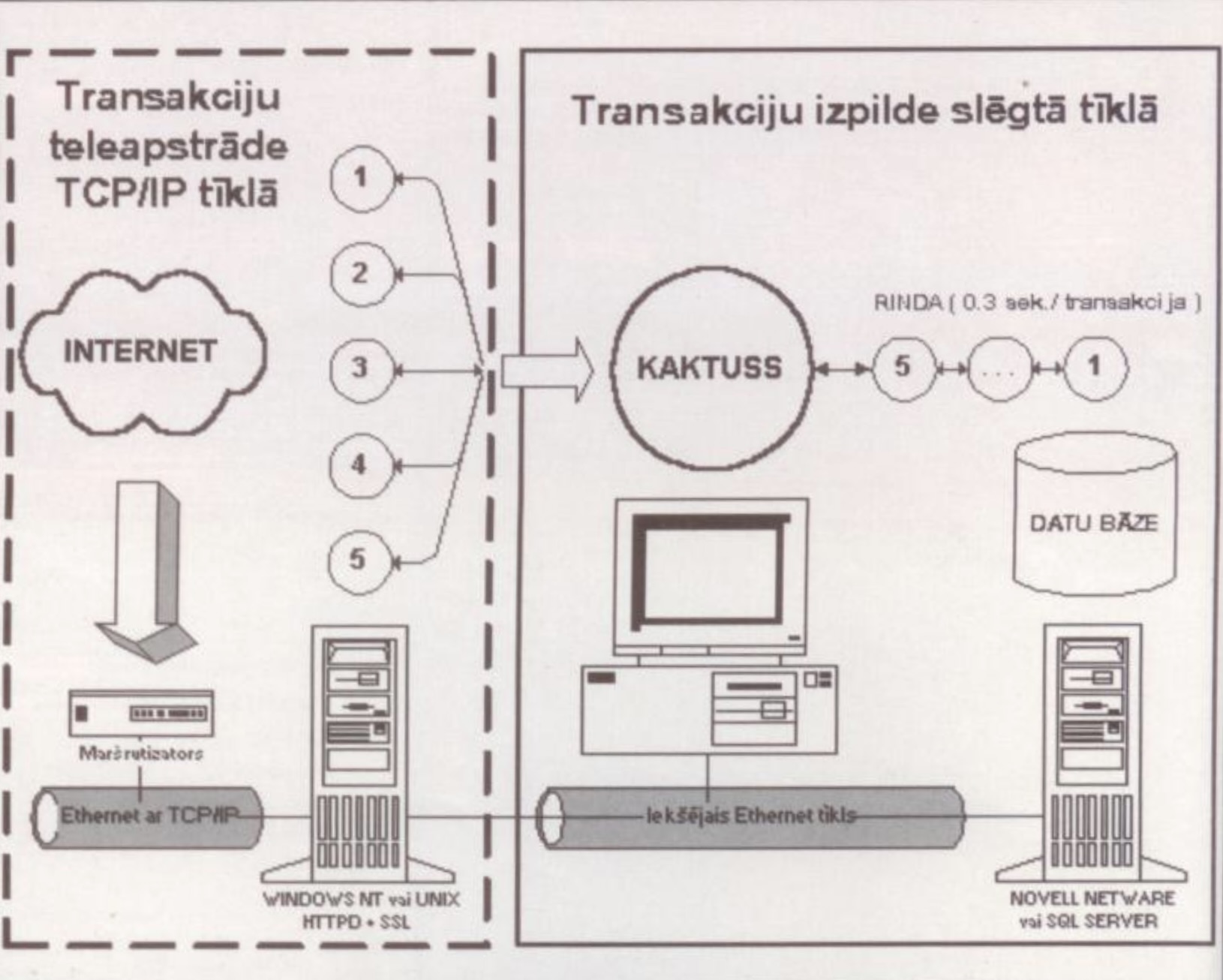
Their main task is to gather, in real time, the requests arriving from the slow terminals and to feed those requests quickly to the central processor on a queue basis. The central processor executes them instantly and places the formatted reply back into the outgoing queue. The chief aim of such middleware operation is to free the central processor from needlessly waiting on slow terminals. In this way the mainframe's processor time is used efficiently — fractions of a second per request. Some of the better-known professional transaction systems are CICS, Tuxedo, Encina and Transarc. Despite mainframe processors being slower than today's Pentium chips, building systems this way allows a single mainframe to serve tens of thousands of terminals. This is how ticket reservation systems, credit card authorization and other large OLTP systems work. To galvenais uzdevums ir reālā laikā savākt no lēnajiem termināļiem pienākošos pieprasījumus un ātri iebarot šos pieprasījumus centrālajam procesoram pēc rindas principa. Centrālais procesors tos momentā izpilda un noformēto atbildi ieliek atpakaļ izejas rindā. Galvenais middleware darbības mērķis ir atbrīvot centrālo procesoru no gaidīšanas uz lēno termināļu reakciju. Dažas pazīstamākās transakciju sistēmas ir CICS, Tuxedo, Encina, Transarc. Neskatoties uz to, ka Rietumos lietoto lieldatoru ātrdarbība ir mazāka nekā Pentium procesoriem, šāda uzbūve dod iespēju vienam lieldatoram apkalpot desmitiem tūkstošu termināļu.
The KAKTUSS system works on the mainframe principle Sistēma KAKTUSS darbojas pēc lieldatora principa
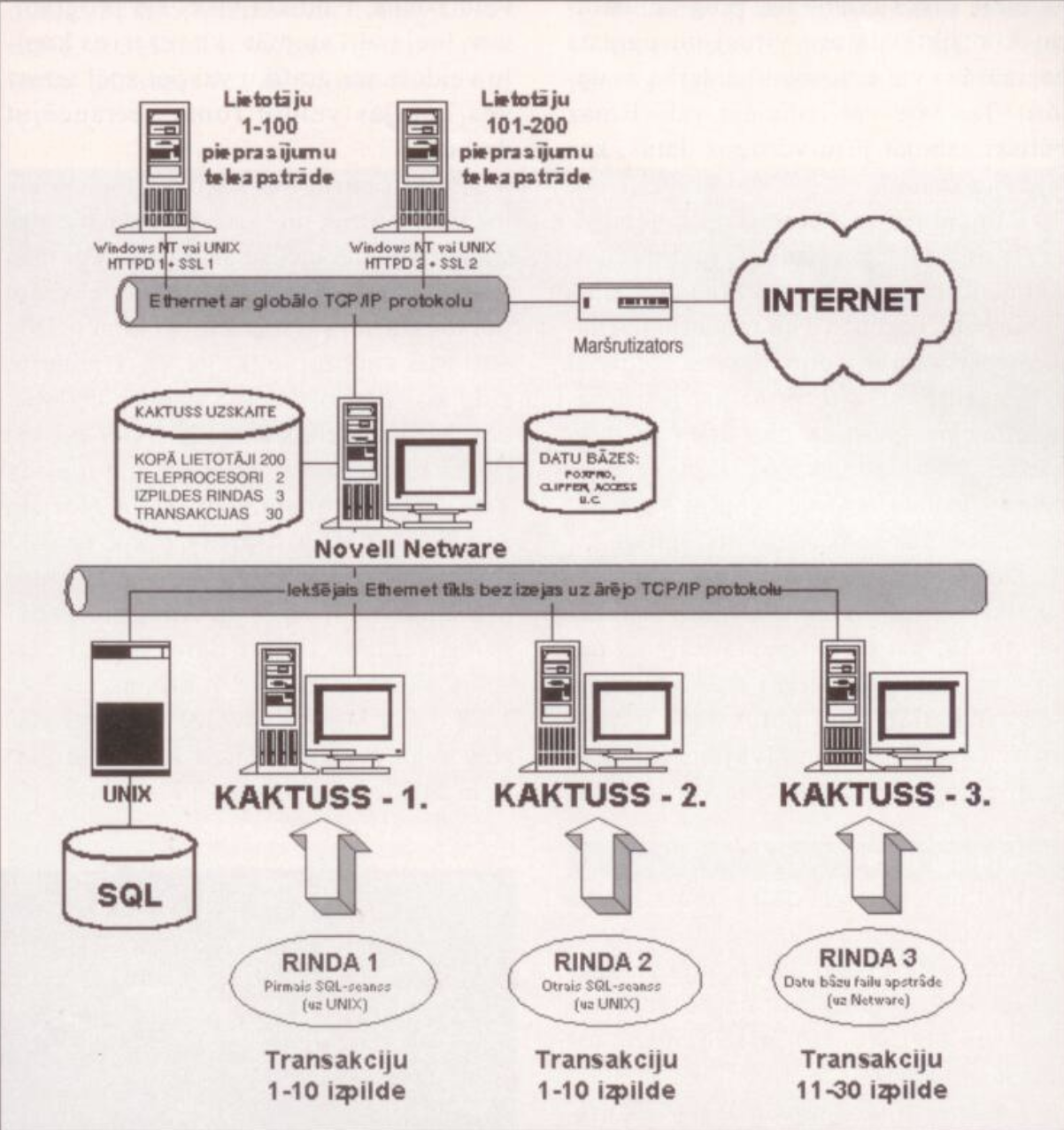
KAKTUSS delivers mainframe-like capabilities on the basis of a local network of personal computers. All data processing functions are centralized on a server computer set aside for that purpose. This computer has access to the databases on the local network, but is in principle unreachable from the global network. Data exchange with the outside world is carried out by the transaction processor software, one part of which runs on a publicly accessible WWW server. In this solution the WWW server itself performs the role of the mainframe's teleprocessor. The two servers — the WWW server and KAKTUSS — communicate over a securely isolated local Ethernet segment on which the global TCP/IP protocol is not maintained. KAKTUSS nodrošina lieldatoram līdzīgas iespējas uz personālo datoru lokālā tīkla bāzes. Visas datu apstrādes funkcijas ir centralizētas serverī, kurš principā nav pieejams no globālā tīkla. Datu apmaiņu ar ārpasauli veic transakciju procesora programmatūra, kuras viena daļa darbojas publiski pieejamā WWW serverī. WWW serveris šādā risinājumā izpilda lieldatora teleprocesora lomu. Abi serveri — WWW un KAKTUSS — sazinās pa droši izolētu lokālā tīkla Ethernet segmentu, kurā globālais TCP/IP protokols netiek uzturēts.
To use the KAKTUSS system, ordinary hypertext client software is installed on users' computers — Netscape Navigator, at the time the most popular hypertext browser. This program can loosely be compared to a mainframe terminal's autonomous control software. Netscape Navigator provides a graphical dialogue and broader functionality via Java or other client-side extensions. The data flow from the client to the WWW server is handled by the HTTP protocol. The SSL public-key algorithm is used to encrypt sensitive information. Lai izmantotu sistēmu KAKTUSS, lietotāju datoros tiek instalēta parastā hiperteksta klienta programmatūra. Netscape Navigator ir šobrīd populārākā hiperteksta lappušu attēlošanas programma. Datu plūsmu no klienta datora līdz WWW serverim nodrošina HTTP protokols. Sensitīvas informācijas šifrēšanai tiek lietots SSL publisko atslēgu algoritms.
If hackers break an organization's protection at its connection to the global TCP/IP network, the result will disrupt only the WWW server. If the data holder has not enabled TCP/IP on its internal local network, the KAKTUSS server is guaranteed to be unreachable from outside. The computer holding KAKTUSS and the valuable databases can be kept behind locked doors. With the KAKTUSS system, the owner of the data can exercise complete control over the use of its electronic information. Ja hakeri uzlauž organizācijas aizsardzību, tiks traucēta tikai WWW servera darbība. Ja datu turētājs nav iedarbinājis iekšējā lokālajā tīklā TCP/IP protokolu, KAKTUSS serveris garantēti būs nepieejams no ārienes. Ar sistēmu KAKTUSS datu īpašnieks var realizēt pilnīgu savas elektroniskās informācijas izmantošanas kontroli.
KAKTUSS creates user sessions for working with the information system KAKTUSS veido lietotāju seansus darbam ar informatīvo sistēmu
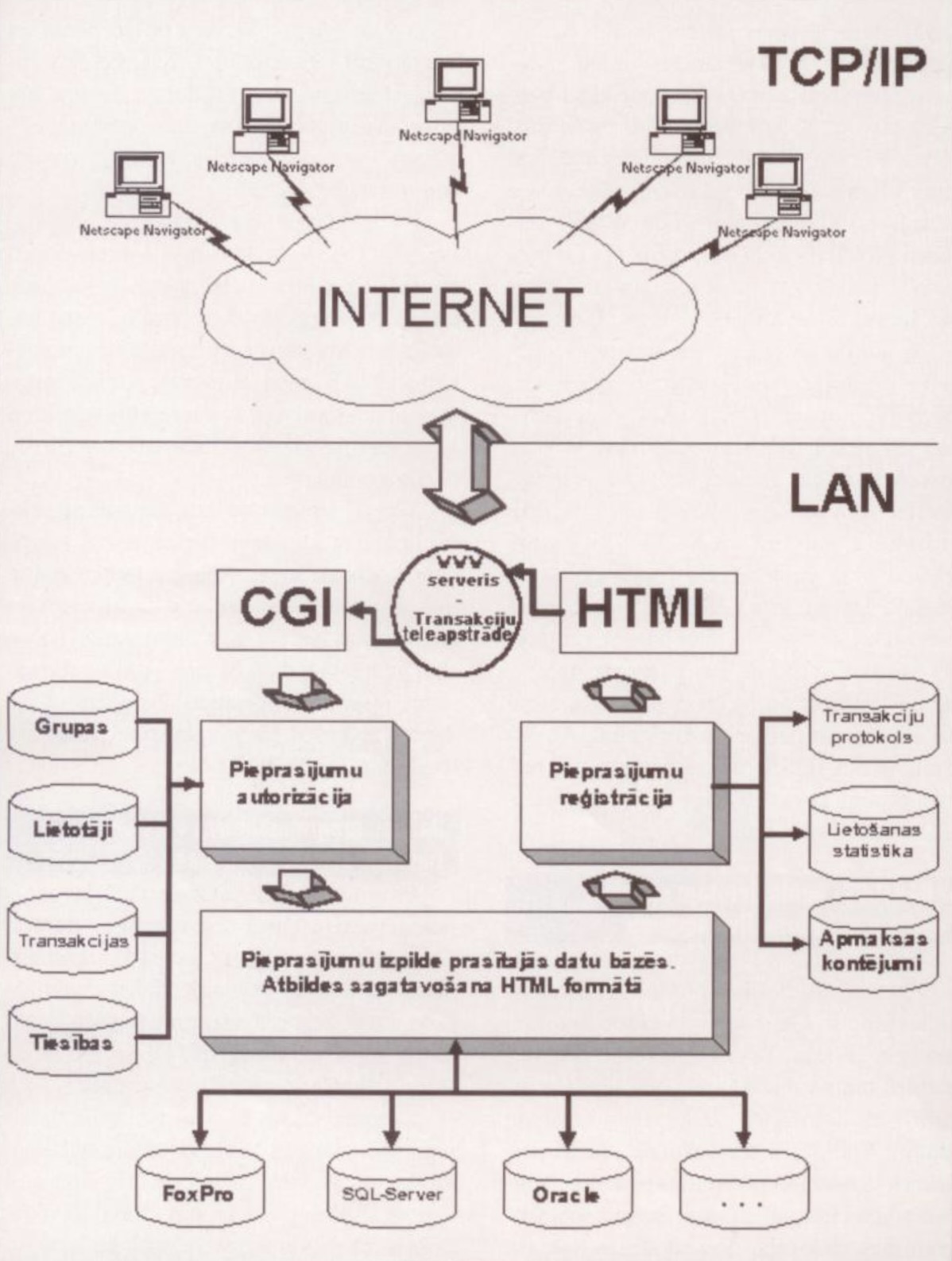
The main task of the KAKTUSS server software, like that of any middleware product, is simple — to create user sessions (login, logout, menu, password change) and, within those sessions, to execute specific transactions according to the rights granted to the user, processed on a queue basis. Each transaction is a callable program module. The data holder programs these modules for its own applications. Parameters entered by the user into HTML forms travel across the global network to the KAKTUSS server. The server analyzes the request, checks database usage rights and, once confirmed, executes the requested module. Each module dynamically generates an HTML reply. KAKTUSS servera programmatūras galvenais uzdevums ir vienkāršs — veidot lietotāju seansus (Login, Logout, izvēlne, paroles maiņa) un šajos seansos izpildīt konkrētas transakcijas pēc rindas principa. Katra transakcija ir izsaucams programmas modulis. Šos moduļus saviem lietojumiem programmē pats datu turētājs. Parametri no HTML formām nonāk līdz KAKTUSS serverim, kurš pieprasījumu analizē, pārbauda datu bāzu lietošanas tiesības un izpilda prasīto moduli. Rezultāts tiek atgriezts HTML lappuses veidā.
The system makes it convenient to combine data retrieval from different databases Sistēma dod iespēju ērti kombinēt datu ieguvi no dažādām datu bāzēm
The transaction-processor nature of the KAKTUSS software makes it possible to work with several databases on different platforms at once, combining data retrieval from SQL servers, FoxPro databases, and ordinary document or image files. The server software can perform any function programmed into the modules: searching for information, adding to or modifying databases, administering user rights, and so on. Programmatūras KAKTUSS transakciju procesora daba nodrošina iespēju strādāt uzreiz ar vairākām dažādu platformu datu bāzēm vienlaikus, kombinējot datu ieguvi no SQL serveriem, FoxPro datu bāzēm un dokumentu vai attēlu failiem. Servera programmatūra var izpildīt jebkuras funkcijas, ko datu turētājs ieprogrammē moduļos.
Like any transaction processor, KAKTUSS ensures that transactions complete in full. If data is requested from several databases, a single user request triggers several subordinate SQL requests. The user receives a reply only once all of the database operations have been carried out. The reply to a complex request is composed as a dynamic hypertext page, combining data drawn at once from all of the databases queried. The content of a reply may differ depending, for example, on the user's address on the TCP/IP network. KAKTUSS uzdevums ir nodrošināt transakciju pilnīgu pabeigšanu. Viens lietotāja pieprasījums var izsaukt vairākus SQL pieprasījumus. Atbilde tiek noformēta kā dinamiska hiperteksta lappuse, apvienojot tajā datus no visām prasītajām datu bāzēm. Atbildes saturs var atšķirties atkarībā no lietotāja adreses TCP/IP tīklā.
The user receives new software versions every day Jaunas programmatūras versijas lietotājs saņem katru dienu
Software often has to be replaced with a new version on every computer in an organization — a matter of months or even years in large organizations. With the KAKTUSS system this problem has been solved very successfully. Any improvement implemented in one of the functional modules on the server is immediately available to all users across the global network. At present, improvement of the software of KAKTUSS systems in production takes place every day, without disturbing their many on-line users — located in Riga, in Latvia's districts, and in the Republic of Latvia's embassies abroad. Programmatūras versiju nomaiņa lielās organizācijās bija mēnešu un pat gadu jautājums. Ar sistēmu KAKTUSS šo problēmu izdevās atrisināt. Jebkuri uzlabojumi servera moduļos ir tūlīt pieejami visiem lietotājiem globālajā tīklā. KAKTUSS programmatūras uzlabošana notiek katru dienu, netraucējot tās daudzos on-line lietotājus Rīgā, Latvijas rajonos un LR vēstniecībās ārvalstīs.
Administration of users and their rights is modelled on Novell NetWare Lietotāju un to tiesību administrācija realizēta pēc Novell Netware parauga
So as not to have to invent new server management constructs, the system's authors took Novell NetWare's user accounting and authorization system as their model. Similar capabilities are built into the KAKTUSS server, but with respect to transaction modules rather than files. User groups, passwords, working-hour and account limits, maximum reply data volumes, and other rights all apply to modules. For each user's session the server dynamically assigns rights to execute modules depending on the computer's network address — the firewall principle. This allows a user to work with a broad range of transactions within their own organization's network, while access from the Internet can be narrowed or forbidden altogether. Every transaction and its results are logged, making it possible to establish precisely which user made use of the system, when, and to what extent. Sistēmas autori paraugam izmantoja Novell Netware lietotāju uzskaites un autorizācijas sistēmu. Serverī KAKTUSS lietotāju grupas, paroles, darba laika limiti, atbildēs pieļaujamie datu apjomi un citas tiesības attiecas uz transakciju moduļiem. Serveris katra lietotāja seansam nodrošina dinamisku tiesību piešķiršanu izpildīt moduļus atkarībā no datora adreses tīklā — t.s. ugunssienas (firewall) princips. Jebkura transakcija tiek reģistrēta protokola datu bāzē.
If the data holder does not program into its system the ability to modify or copy the databases, the integrity and confidentiality of the data within KAKTUSS will always remain untouched. The data holder's information system will be available 24 hours a day within the permitted volume of transactions, but is guaranteed to be unavailable for any other uses. Ja datu turētājs savā sistēmā neieprogrammē iespēju modificēt vai nokopēt datu bāzes, datu integritāte un konfidencialitāte sistēmā KAKTUSS vienmēr paliks neskarta. Datu turētāja informācijas sistēma būs pieejama 24 stundas diennaktī atļauto transakciju apjomā.
The technical solution is cheap enough and flexibly expandable Tehniskais risinājums ir gana lēts un elastīgi paplašināms
The KAKTUSS server software runs in a simple batch mode, without using windows or object-oriented programming. We chose the FoxPro DBMS for the KAKTUSS server — the most widely taught and used DBMS in Latvia, with full SQL support in its latest versions. The choice of FoxPro as the system's language is of no fundamental importance. In place of FoxPro there could be any 4GL system with similar capabilities — PowerBuilder, Visual Basic or C++. KAKTUSS servera programmatūra darbojas vienkāršā pakešu režīmā, neizmantojot logus vai objektorientētu programmēšanu. Servera programmatūrai izvēlējāmies DBVS FoxPro — Latvijā visplašāk mācītā un lietotā DBVS ar pilnu SQL nodrošinājumu. FoxPro vietā var būt jebkura 4GL sistēma ar līdzīgām iespējām, piemēram, PowerBuilder, Visual Basic vai C++.
When KAKTUSS is introduced as an intermediate stage between end users and the SQL server, modernizing the central SQL server is not strictly necessary as the number of external users grows. If the number of users doubles, a second computer running KAKTUSS software is attached to the local network. The second server will use the same user accounting tables as the first, but together they will hold two separate sessions on the SQL server. All external users' requests are thereby distributed evenly between the two KAKTUSS servers. By attaching further personal computers, capacity can be divided further between particular databases or functions — producing a multi-processor system carrying out parallel data processing (Figure 3). In large Western organizations such solutions are sometimes called a data warehouse, or data farm. Pieaugot ārējo lietotāju skaitam, centrālā SQL servera modernizācija nav obligāta. Ja lietotāju skaits divkāršosies, blakus pirmajam KAKTUSS serverim pieslēdz otru datoru ar KAKTUSS programmatūru. Abi serveri kopā izmantos divas atsevišķas sesijas SQL serverī. Pieslēdzot papildu datorus, jaudu var sadalīt starp konkrētām datu bāzēm vai funkcijām, izveidojot vairāku procesoru sistēmu ar paralēlu datu apstrādi (3. zīmējums). Lielās Rietumu organizācijās šādus risinājumus sauc par data warehouse jeb datu fermu.
In such a complex, the decisive criterion for increasing capacity becomes not the number of users but the speed of the reply to an individual request. The system's execution of requests must meet OLTP requirements — requests must not drag on because of complicated database search operations. The data holder must think carefully about each specific transaction, use indexed data, and limit the number of data records returned in a reply at one time. This norm applies to any transaction processor, and KAKTUSS is no exception. Svarīgākais kritērijs jaudas palielināšanai ir atbildes ātrums uz individuālu pieprasījumu. Sistēmas pieprasījumu izpildei jāatbilst OLTP prasībām — tie nedrīkst ieilgt sarežģītu meklēšanas operāciju dēļ. Datu turētājam jāizmanto indeksēti dati un atbildēs jāierobežo vienlaicīgi atgriežamo datu vienību skaits.
Examples of KAKTUSS in use KAKTUSS lietošanas piemēri
The KAKTUSS system has been used since August 1995 by the Ministry of the Interior, providing access over the State Data Transmission Network to the immigration service's databases, the database of invalid personal documents, the visa database and the Population Register database. The system runs in production 24 hours a day. Over the course of a year the system executed 250,000 information requests in on-line mode. Sistēmu KAKTUSS kopš 1995. gada augusta izmanto Iekšlietu ministrija, nodrošinot pieeju imigrācijas dienesta datu bāzēm, nederīgo personu dokumentu datu bāzei, vīzu datu bāzei un Iedzīvotāju reģistra datu bāzei. Sistēma darbojas 24 stundas diennaktī. Gada laikā sistēma on-line režīmā izpildījusi 250 000 izziņu pieprasījumu.
Another government application is real-time access to the Register of Enterprises database — legal data on any enterprise registered in the Republic of Latvia, retrieved within a few seconds over the State Data Transmission Network. Cits valdības lietojums ir pieeja Uzņēmumu reģistra datu bāzei reālajā laikā — juridiskie dati par jebkuru Latvijas Republikā reģistrētu uzņēmumu iegūstami dažu sekunžu laikā.
A commercial version of the KAKTUSS system was demonstrated during the Datortehnika '96 exhibition. At present this version provides access to Lursoft's economic information databases over the global Internet, metering paid services according to actual use. Over six months this system executed more than 190,000 information requests concerning firms, business sectors and addresses, the outcomes of court proceedings, and press materials. The system works with a total data volume exceeding one million records. Izstādes Datortehnika '96 laikā tika demonstrēta sistēmas komerciālā versija, kas nodrošina firmas Lursoft ekonomiskās informācijas datu bāzu pieejamību Internetā. Pusgada laikā šī sistēma izpildījusi vairāk nekā 190 000 izziņu pieprasījumu par firmām, biznesa nozarēm, tiesu procesiem un preses materiāliem. Kopējais datu apjoms pārsniedz miljons vienību.
The system has also been deployed in other organizations that require controlled on-line access to large databases containing sensitive information. Sistēma ir ieviesta arī citās organizācijās, kurās nepieciešama kontrolēta pieeja lielām datu bāzēm ar sensitīvu informāciju.
Data-exchange security rests on public-key cryptography Datu apmaiņas drošība balstās uz publisko atslēgu kriptogrāfiju
Many are skeptical of providing access to their databases over global networks. Hackers' exploits have created the mistaken impression that it is impossible to guarantee one-hundred-percent security. The KAKTUSS system provides controlled and closed access using modern cryptography — the SSL protocol. The data flow between the client's and the data holder's computers is encrypted with a method the US government uses to arm missile launch systems. Daudzi skeptiski izturas pret domu nodrošināt pieeju savām datu bāzēm globālos tīklos. Sistēma KAKTUSS nodrošina kontrolētu un slēgtu pieeju, izmantojot moderno kriptogrāfiju — SSL protokolu. Datu plūsma starp klienta un datu turētāja datoriem ir šifrēta ar metodi, ko ASV valdība lieto raķešu palaišanas sistēmu iedarbināšanai.
For carrying out electronic payments, the system provides a special HTTP client for DOS and Windows environments, in which any data exchange can additionally be authorized using the PGP package's public-key algorithm for electronic signatures and document encryption. Elektronisko norēķinu realizēšanai sistēma nodrošina speciālu HTTP klientu DOS un Windows vidēm ar PGP publisko atslēgu algoritmu elektroniskiem parakstiem un dokumentu šifrēšanai.
KAKTUSS is part of the global intranet and middleware world KAKTUSS ir daļa no globālā Intraneta un middleware
In 1995 the world began to acquaint itself with the possibilities of hypertext on the WWW. One can side with those experts who call 1997 the year of the hypertext on-line database. Hypertext has opened a fantastic opportunity for the world's information industry — to make the information resources accumulated over decades on mainframes, UNIX systems and personal-computer local networks usable from any computer connected to the global network. The record-short adoption period of HTTP software — less than a year — in corporate information technology attests to how quickly this is happening. Pasaule 1995. gadā sāka iepazīties ar hiperteksta iespējām WWW tīklā. Hiperteksts ir pavēris iespēju padarīt pieejamus gadu desmitos lieldatoros, UNIX un personālo datoru lokālajos tīklos uzkrātos informācijas resursus no jebkura globālajam tīklam pieslēgta datora. Par to, ka tas notiks tuvākajā laikā, liecina HTTP programmatūras rekordīsais — mazāk nekā gadu — ieviešanas periods korporatīvajos IT lietojumos.
KAKTUSS is one of the first Internet information systems to provide interactive, authorizable sessions for accessing databases through a hypertext user interface. The first on-line transaction processing system built on this basis entered production in August 1995 and has been running in Latvia against real databases for a year and a half already. Similar solutions are now appearing all over the world — now called intranet and middleware solutions providing access to corporate information resources. KAKTUSS ir viena no pirmajām Interneta informatīvajām sistēmām, kas nodrošina interaktīvus un autorizējamus seansus piekļūšanai datu bāzēm ar hiperteksta lietotāja interfeisu. Pirmā on-line transakciju apstrādes sistēma uz šīs bāzes tika ieviesta ekspluatācijā 1995. gada augustā un Latvijā darbojas ar reālām datu bāzēm jau pusotru gadu. Šobrīd līdzīgi risinājumi rodas visā pasaulē — tos sauc par Intraneta un middleware risinājumiem.